

Understanding screw measurements is crucial for various applications, from simple repairs to complex engineering projects. This guide details
essential techniques and tools for accurate identification and measurement of screws.
Accurate screw measurements are fundamental in countless industries and DIY projects; Correctly identifying a screw’s characteristics – its diameter, pitch, and length – ensures compatibility and proper functionality. Misidentification can lead to assembly failures, damaged components, and safety hazards. This guide provides a comprehensive overview of the methods and tools used to precisely measure screws.
Whether you’re a seasoned machinist or a beginner, understanding these principles is vital. We’ll explore the significance of thread standards like Unified National, Metric, and Whitworth, and how to utilize tools such as screw pitch gauges and calipers effectively. Proper measurement facilitates selecting the right fastener for any application, guaranteeing a secure and reliable connection.

Understanding Screw Threads
Screw threads are the helical ridges formed on a screw’s shank, enabling it to fasten materials together. The thread’s geometry – its pitch, angle, and form – dictates its strength and compatibility with corresponding nuts or tapped holes. Pitch, the distance between adjacent thread crests, is a primary measurement. Thread angle, typically 60 degrees for Unified threads or 55 degrees for Whitworth, is also crucial for gauge selection.
Different thread standards exist globally, each with unique characteristics. Identifying the thread type is the first step in accurate measurement. Understanding these nuances ensures the correct tools are used and prevents damage to both the screw and the receiving component. Proper thread engagement is vital for a secure and lasting connection.
Types of Screw Threads
Several screw thread types are commonly encountered, each designed for specific applications. Unified National Coarse (UNC) and Unified National Fine (UNF) threads are prevalent in North America, differing in thread density – UNC offers faster assembly, while UNF provides greater strength. Metric threads, utilizing millimeters, are widely used internationally and are defined by their pitch in millimeters.
Whitworth threads, characterized by a 55-degree thread angle, were historically common in British engineering. Identifying the thread type is essential for selecting the correct measuring tools, like a 60-degree gauge for Imperial threads and a 55-degree gauge for Whitworth. Accurate identification ensures proper fit and functionality.
Unified National Coarse (UNC) and Fine (UNF) Threads
Unified National Coarse (UNC) threads feature fewer threads per inch, enabling quicker assembly and disassembly due to their larger thread form. They are generally preferred for applications where speed is prioritized over ultimate strength. Conversely, Unified National Fine (UNF) threads boast a higher thread count per inch, resulting in a stronger connection and increased resistance to loosening.
UNC threads are suitable for general-purpose fastening, while UNF threads excel in applications subject to vibration or shock. Identifying whether a screw utilizes UNC or UNF is vital for selecting compatible nuts and hardware. Both systems utilize a 60-degree thread angle.
Metric Threads

Metric threads, widely used internationally, are defined by their diameter in millimeters and their pitch – the distance between adjacent threads, also in millimeters. Unlike UNC/UNF, metric screws don’t use threads per inch. A designation like “M6 x 1.0” indicates a 6mm diameter screw with a 1.0mm pitch.
Metric threads utilize a 60-degree thread angle, similar to UNC/UNF. Accurate measurement of both diameter and pitch is essential for proper identification and ensuring compatibility with corresponding nuts and bolts. Screw pitch gauges specifically designed for metric threads are readily available for precise measurements.
Whitworth Threads
Whitworth threads, a British standard, are characterized by a 55-degree thread angle, distinguishing them from both Unified and Metric threads. Historically significant, they are still found in older machinery and certain specialized applications. Identifying Whitworth threads requires a specific 55-degree screw pitch gauge; using a 60-degree gauge will yield inaccurate results.
Measurements are typically expressed in threads per inch (TPI). Correctly identifying a Whitworth thread is crucial for sourcing the appropriate replacement fasteners. The thread diameter, measured with calipers, combined with the pitch determined using the 55-degree gauge, allows for accurate identification and ensures proper fit and function.
Tools for Measuring Screw Pitch
Accurate screw pitch measurement relies on specialized tools designed to interact with the thread form. Screw pitch gauges are the primary instruments, available in sets covering various thread standards. These gauges consist of a series of blades, each representing a specific pitch. By matching a blade to the screw’s threads, the pitch can be quickly determined.
Thread identification kits often include calipers alongside pitch gauges, providing a comprehensive solution. These tools deliver reliable approximations, though precision instruments are available for critical applications. Selecting the correct gauge – 60 or 55 degree – is paramount for accurate results, depending on the thread type.
Screw Pitch Gauges: An Overview
Screw pitch gauges are essential tools for determining the number of threads per inch (TPI) or pitch in millimeters (mm) of a screw. They function by allowing the user to compare the gauge’s blades with the screw’s threads. A proper fit indicates the correct pitch. Gauges are typically categorized by thread angle – 60 degrees for unified threads and 55 degrees for Whitworth threads.
These gauges come in sets, offering a range of pitches for comprehensive measurement; They are considered precision tools, providing a reliable approximation of the thread pitch. Proper usage involves clean threads and careful blade selection for accurate identification.
Using Screw Pitch Gauges – 60 Degree
60-degree screw pitch gauges are specifically designed for identifying Unified National Coarse (UNC) and Unified National Fine (UNF) threads – commonly found in imperial measurements. To use, select the gauge with the 60-degree angle. Carefully align the blades with the screw’s threads, gently applying pressure. The blade that fits snugly into the screw’s threads, without forcing, indicates the correct pitch.
Ensure both the screw and gauge blades are clean for accurate results. If multiple blades feel similar, try a finer adjustment. Remember, imperial threads utilize this 60-degree gauge for precise thread identification and measurement.
Using Screw Pitch Gauges – 55 Degree
55-degree screw pitch gauges are essential for identifying Whitworth threads, a British standard often encountered in older machinery or specific applications. Similar to the 60-degree gauges, select the appropriate 55-degree angled gauge. Gently apply the blades to the screw’s threads, seeking a snug fit without excessive force.
The blade that aligns perfectly with the thread profile indicates the correct pitch. Cleanliness of both the screw and gauge blades is vital for accuracy. Whitworth threads exclusively utilize this 55-degree gauge for reliable thread identification and measurement, ensuring proper component compatibility.
Measuring Screw Diameter

Accurate diameter measurement is fundamental to screw identification and selection. Calipers, both digital and dial, are the primary tools for this task. When measuring, ensure the screw is clean and free of debris. Position the screw’s shank between the caliper jaws, applying gentle, consistent pressure.
Understanding major and minor diameters is crucial. The major diameter represents the outer thread size, while the minor diameter measures across the root of the threads. Calipers typically measure the major diameter. Precise diameter measurement, combined with pitch, allows for definitive screw identification and ensures compatibility with mating components.
Using Calipers for Diameter Measurement
Calipers offer precision in determining a screw’s diameter. Begin by zeroing the calipers before each measurement to ensure accuracy. Gently, but firmly, close the jaws around the screw’s shank – the solid portion below the threads. Avoid applying excessive force, which can distort the reading.
Read the measurement on the caliper scale, noting both the main scale and the vernier scale (if applicable) for increased precision. Digital calipers provide a direct digital readout. Repeat the measurement several times at different points along the shank and average the results for a more reliable value. This technique minimizes errors and provides a consistent diameter reading.
Understanding Major and Minor Diameter
Screw diameter isn’t singular; it encompasses major and minor diameters. The major diameter represents the largest diameter of the screw thread – measured across the crests of the threads. This is the dimension typically measured with calipers and specified in screw standards.
Conversely, the minor diameter is the smallest diameter, measured across the roots of the threads. It’s crucial for determining the strength of the screw and the fit within a nut or tapped hole. While harder to measure directly, understanding both diameters is vital for precise engineering calculations and ensuring proper screw functionality. Accurate diameter readings are essential for compatibility.
Screw Length Measurement
Determining screw length is straightforward, yet precision matters. Length is typically measured from the underside of the screw head to the tip of the screw. For screws with pointed ends, measure to the very tip. However, for screws with blunt or rounded ends, the length is measured to the last thread.
Utilize calipers or a ruler for accurate measurement. When using a ruler, ensure the screw is aligned parallel to the zero mark. Consistent measurement techniques are vital for repeatability. Remember that screw length doesn’t include the head; it’s the threaded portion plus the shank extending beyond the threads.
Identifying Screw Types

Recognizing different screw types is fundamental for selecting the correct fastener. Self-drilling screws create their own holes, simplifying installation in metal or plastic. Stainless steel screws offer corrosion resistance, ideal for outdoor or marine applications. Grub screws, also known as Allen grub screws, utilize a hexagonal drive and are commonly used for securing objects within or against another component.
Industrial screws encompass a broad range of fasteners used in manufacturing and construction. Knowing these distinctions aids in project success. Identifying the screw type often precedes accurate measurement, ensuring compatibility and optimal performance. Online resources and supplier catalogs can further assist in identification.
Self-Drilling Screws
Self-drilling screws, also known as self-tapping screws, combine drilling and fastening into a single operation, streamlining assembly. These screws feature a drill-bit-like point that eliminates the need for pre-drilling, saving time and effort. They are commonly used in metal, plastic, and wood applications where creating a pilot hole is impractical or undesirable;
When measuring self-drilling screws, focus on the overall length, shank diameter, and drill point diameter. Accurate measurement ensures proper material penetration and secure fastening. Suppliers in India offer a wide variety of these screws, catering to diverse industrial needs.

Stainless Steel Screws
Stainless steel screws are prized for their corrosion resistance, making them ideal for outdoor and harsh environments. Different grades of stainless steel offer varying levels of protection and strength. When measuring these screws, it’s vital to identify the material grade alongside standard dimensions like length and diameter.

Suppliers in India provide a comprehensive range of stainless steel screws, catering to industries like construction, marine, and food processing. Accurate measurement is crucial for ensuring compatibility and preventing failures due to improper sizing. Consider the thread type (UNC, UNF, or metric) during measurement for precise identification.
Grub Screws/Allen Grub Screws
Grub screws, also known as Allen grub screws, are headless fasteners typically used to secure an object within or against another. Measuring these involves determining the diameter of the screw, the length, and crucially, the Allen key size required for installation. Indian manufacturers and exporters offer a wide variety of these screws.
Accurate measurement is essential for ensuring a secure fit and preventing damage to the components being fastened. Identifying the thread pitch is also important, especially when replacing existing screws. Online price details from Indian suppliers can aid in sourcing the correct size and type for specific applications, ensuring compatibility and optimal performance.

Industrial Screws
Industrial screws encompass a broad range of fasteners used in manufacturing and construction. Accurate measurement of these screws is paramount for assembly, maintenance, and repair operations. Indian manufacturers and exporters supply diverse industrial screw types, necessitating precise identification.
Key measurements include diameter, length, and thread pitch. Determining these parameters ensures compatibility with corresponding nuts, bolts, and tapped holes. Online resources provide price details and supplier information, facilitating sourcing the correct screws for specific industrial applications. Proper measurement prevents costly errors and ensures structural integrity in critical assemblies, contributing to efficient and safe operations.
Allen Screw Measurements
Allen screws, also known as hex socket screws, require specific measurement techniques due to their unique head style. Determining the Allen wrench (hex key) size is critical, alongside measuring the screw’s diameter and length. Online platforms in India list Allen screw suppliers, offering varied sizes and materials.
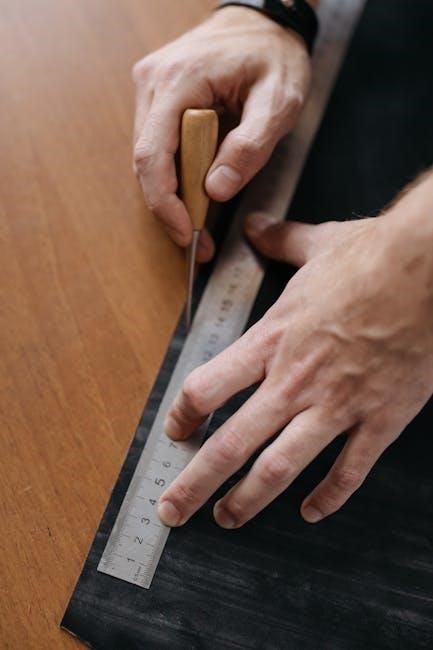
Accurate measurement ensures proper tool engagement, preventing damage to the screw head. Major and minor diameters, alongside thread pitch, are essential for compatibility. Precise measurements are vital for applications demanding high torque and secure fastening. Utilizing calipers and pitch gauges guarantees correct identification and selection, contributing to efficient assembly and reliable performance.
Thread Charts and Identification Resources
Identifying screw threads accurately relies on readily available resources like comprehensive thread charts found online. These charts categorize threads by parameters such as threads per inch (TPI) for imperial screws and pitch in millimeters for metric screws. Knowing whether a thread is 60-degree (UNC/UNF) or 55-degree (Whitworth) is fundamental.
Various online catalogs offer screw pitch gauges and identifiers, often bundled with calipers for complete measurement solutions. Hobby-Machinist forums highlight the importance of the screw shank’s outer diameter (OD) for identification. Utilizing these resources streamlines the process, ensuring correct screw selection and preventing compatibility issues in projects.
Importance of Accurate Screw Measurements
Precise screw measurements are paramount for successful assembly and functionality in countless applications. Incorrect measurements can lead to stripped threads, weakened joints, and ultimately, project failure. Selecting the correct screw ensures proper clamping force, preventing loosening and maintaining structural integrity.
Accurate identification of pitch and diameter is vital for compatibility with tapped holes and nuts. Utilizing appropriate tools, like screw pitch gauges, delivers reliable approximations, even if classified as precision instruments. This diligence avoids costly errors, saves time, and guarantees a secure, long-lasting connection in any mechanical system.
Common Errors in Screw Measurement
Several errors frequently occur during screw measurement, impacting accuracy. Misinterpreting thread angles – confusing 60-degree imperial threads with 55-degree Whitworth threads – is a common mistake. Relying solely on visual estimation of pitch, instead of using a gauge, introduces significant inaccuracies.
Another error involves measuring the screw’s outer diameter (OD) instead of the major or minor diameter, crucial for determining thread fit. Failing to account for plating or coatings can also lead to incorrect diameter readings. Inconsistent application of calipers or pitch gauges, and neglecting thread charts for verification, further contribute to measurement errors.
Screw Measurement Standards
Standardization is vital for screw measurement, ensuring interchangeability and compatibility. Unified National Coarse (UNC) and Unified National Fine (UNF) threads adhere to ANSI/ASME standards, defining pitch, diameter, and thread form. Metric screws follow ISO standards, offering a globally recognized system with precise specifications.
Whitworth threads, historically significant, have their own British Standards (BS) defining their 55-degree thread angle and pitch. Accurate measurement relies on referencing these standards to interpret gauge readings and verify screw dimensions. Consistent adherence to these standards minimizes errors and facilitates seamless integration across various industries and applications.
Resources for Further Learning
Expanding your knowledge of screw measurements involves exploring diverse resources. The Hobby-Machinist forum provides practical advice and discussions on thread gauges and identification. TOOLSiD offers a comprehensive catalog of screw pitch gauges, calipers, and thread identification kits, aiding in precise measurement.
Online thread charts are readily available, assisting in matching thread profiles. Industry websites and manufacturer specifications detail specific screw standards. Consider exploring ANSI/ASME and ISO documentation for in-depth technical information. These resources empower you to refine your skills and confidently tackle complex screw measurement challenges.