Plant systems practice delves into understanding how plants function, encompassing root and shoot systems, tissues, and adaptations.
This practice utilizes assessments, like multiple-choice questions, to gauge comprehension of transpiration and climate change impacts.
Resources, including online materials and textbooks, aid in mastering plant biology concepts for effective learning and application.
What are Plant Systems?
Plant systems represent the intricate organization of structures within a plant, working cohesively to ensure survival and propagation. These systems aren’t isolated; rather, they are interconnected networks facilitating vital processes. Core components include the root system, responsible for anchorage and nutrient/water absorption, and the shoot system, dedicated to growth, reproduction, and photosynthesis.
Understanding these systems requires examining the plant’s tissues – xylem and phloem for transport, epidermis for protection – and physiological processes like transpiration and nutrient uptake. A plant systems practice approach, often found in PDF study guides, emphasizes recognizing how these elements interact.
Furthermore, plant adaptations, such as those seen in arid or aquatic environments, demonstrate the remarkable plasticity of these systems. Creepers and climbers showcase structural modifications for survival. Effective study involves mastering these interconnected concepts, preparing for assessments covering plant physiology and structural adaptations.
Importance of Understanding Plant Systems
Grasping plant systems is crucial for numerous fields, from agriculture and horticulture to environmental science and biotechnology. A solid understanding allows for optimized crop production, informed conservation efforts, and the development of novel plant-based technologies. Plant systems practice, often delivered through comprehensive PDF resources, reinforces these foundational concepts.
Knowledge of root and shoot functions, transport mechanisms, and physiological processes like photosynthesis directly impacts our ability to address global challenges like food security and climate change.
Furthermore, recognizing plant adaptations – to arid climates, aquatic environments, or unique growth patterns – provides insights into resilience and potential applications. Mastering these systems isn’t merely academic; it’s essential for sustainable practices and innovative solutions. Effective practice, utilizing sample questions and detailed explanations, is key to building this vital understanding.
Root Systems: Anchoring and Absorption
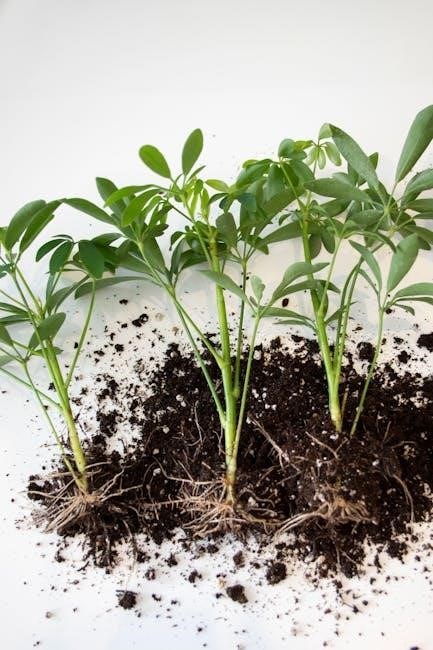
Root systems secure plants and absorb vital water and nutrients; plant systems practice PDFs detail taproot and fibrous root types and functions.
Components of the Root System
The root system, a crucial element explored within plant systems practice materials, is comprised of several key components working in concert. Primarily, the main root, or radicle, establishes the foundational structure, branching into lateral roots that significantly expand the absorptive surface area. These lateral roots further develop root hairs – microscopic extensions dramatically increasing water and nutrient uptake efficiency.
Understanding these components is vital, as practice PDFs often feature questions identifying root parts. Additionally, the root cap protects the delicate apical meristem during growth through soil. The arrangement of these components defines root system types, such as taproot systems (single dominant root) and fibrous root systems (numerous similarly sized roots), both covered extensively in practice exercises. Analyzing these structures is fundamental to grasping plant functionality.
Root Hairs and Water Absorption
Plant systems practice materials heavily emphasize the role of root hairs in water absorption, highlighting their immense surface area. These tubular extensions of epidermal cells are perfectly adapted to maximize contact with soil particles and the water films surrounding them. Water moves into root hairs via osmosis, driven by a water potential gradient – from areas of high water potential in the soil to lower potential within the root.
Practice questions frequently assess understanding of this process, often involving scenarios related to soil composition and water availability. The absorption is further aided by the large number of root hairs, collectively increasing the efficiency of water uptake. PDFs often include diagrams requiring identification of root hair structures and explanations of their function in plant hydration and nutrient transport.
Types of Root Systems (Taproot vs. Fibrous)
Plant systems practice resources dedicate significant attention to differentiating between taproot and fibrous root systems. Taproot systems, exemplified by carrots and dandelions, feature a single, dominant primary root that grows vertically downwards, with smaller lateral roots branching off. These systems are efficient for deep water access and storage.
Conversely, fibrous root systems, common in grasses and corn, consist of a dense network of similarly sized roots. These spread out horizontally, providing excellent soil stabilization and efficient absorption from surface layers. Practice PDFs often include comparative diagrams and questions requiring identification of root system types based on plant morphology. Understanding these distinctions is crucial for analyzing plant adaptations and growth strategies.

Shoot Systems: Growth and Reproduction
Plant systems practice focuses on stems for support, leaves for photosynthesis, and flowers for reproduction—vital components for plant survival and propagation.
Stems: Support and Transport
Stems are foundational to plant structure, providing crucial physical support that allows leaves to reach sunlight and flowers to facilitate reproduction. Beyond support, stems serve as vital vascular highways within the plant. They house xylem and phloem tissues, responsible for the efficient transport of water and nutrients throughout the entire plant system.
Understanding stem anatomy is key in plant systems practice. Different plants exhibit varied stem structures – herbaceous stems are flexible and green, while woody stems offer robust support through layers of bark and wood. The arrangement of vascular bundles within the stem also differs, impacting transport efficiency.
Practice questions often assess knowledge of stem functions, including identifying tissues and understanding how stem adaptations contribute to plant survival in diverse environments. Recognizing the stem’s role in connecting roots to shoots is fundamental to grasping overall plant physiology.
Leaves: Photosynthesis and Gas Exchange
Leaves are the primary sites of photosynthesis, the remarkable process where plants convert light energy into chemical energy in the form of sugars. This process fuels plant growth and sustains life on Earth. Crucially, leaves also facilitate gas exchange, taking in carbon dioxide for photosynthesis and releasing oxygen as a byproduct.
Within leaf structure, specialized cells containing chloroplasts drive photosynthesis. Tiny pores called stomata regulate gas exchange, balancing carbon dioxide intake with water loss. Understanding these structures is vital in plant systems practice.
Practice questions frequently focus on the relationship between leaf anatomy and function, exploring how leaf adaptations – like size, shape, and cuticle thickness – impact photosynthetic rates and water conservation. Assessing knowledge of transpiration’s role in gas exchange is also common, solidifying comprehension of leaf physiology.
Flowers: Reproduction and Pollination
Flowers represent the reproductive structures of many plants, playing a critical role in sexual reproduction. Their primary function is to facilitate pollination, the transfer of pollen from the male part (stamen) to the female part (pistil), leading to fertilization and seed production.
Plant systems practice often assesses understanding of floral anatomy – identifying structures like petals, sepals, stamens, and pistils – and their respective roles. Questions frequently explore different pollination mechanisms, including wind, water, and animal-mediated pollination.
Understanding the adaptations flowers exhibit to attract specific pollinators is key. Practice materials may include scenarios requiring identification of pollination syndromes based on floral characteristics. Furthermore, the link between successful pollination and seed development is a common focus, reinforcing the importance of flowers in plant life cycles.
Plant Tissues: The Building Blocks
Plant tissues – xylem, phloem, and epidermis – are fundamental components. Plant systems practice assesses knowledge of their structures and functions in transport and protection.
Xylem: Water Transport
Xylem is a vital vascular tissue responsible for the efficient transport of water and dissolved minerals from the roots to the rest of the plant. This upward movement is crucial for photosynthesis, nutrient distribution, and maintaining turgor pressure.
Plant systems practice often includes questions assessing understanding of xylem’s structure – composed of tracheids and vessel elements – and how its properties facilitate water conduction. The cohesion-tension theory explains how water moves against gravity, relying on water’s adhesive and cohesive properties, alongside transpiration pull.
Understanding xylem’s role is fundamental to grasping overall plant physiology. Practice questions may explore how environmental factors influence xylem function, such as water availability and temperature. Furthermore, the arrangement of xylem within vascular bundles is a key aspect of plant anatomy often tested in practice exercises.
Phloem: Nutrient Transport
Phloem is the vascular tissue dedicated to transporting sugars – produced during photosynthesis – and other organic nutrients throughout the plant. This transport occurs bidirectionally, from sources (like leaves) to sinks (growing roots, fruits, or storage organs).
Plant systems practice frequently tests knowledge of phloem’s structure, comprised of sieve tube elements and companion cells, and the mechanism of translocation. The pressure-flow hypothesis explains how sugars are loaded into the phloem, creating a pressure gradient that drives sap flow.
Practice questions often assess understanding of how factors like temperature and nutrient availability impact phloem transport. Recognizing the symbiotic relationship between sieve tube elements and companion cells is also crucial. Mastering phloem function is essential for comprehending plant growth, development, and resource allocation.
Epidermis: Protective Outer Layer
The epidermis forms the plant’s outermost protective layer, covering leaves, stems, and roots. It’s typically a single layer of tightly packed cells, crucial for preventing water loss and shielding against pathogens and mechanical damage.
Plant systems practice often includes questions about epidermal adaptations, such as the cuticle – a waxy coating reducing transpiration – and the presence of stomata, regulated by guard cells, for gas exchange. Root hairs, extensions of epidermal cells, maximize water and nutrient absorption.
Understanding epidermal structures and their functions is vital. Practice questions may explore how epidermal features vary across different plant species and environments. Recognizing the role of specialized epidermal cells, like trichomes (plant hairs), in defense and reducing herbivory is also key to mastering plant biology concepts.

Plant Physiology: How Plants Function
Plant physiology explores processes like transpiration, photosynthesis, and nutrient uptake, central to plant systems practice.
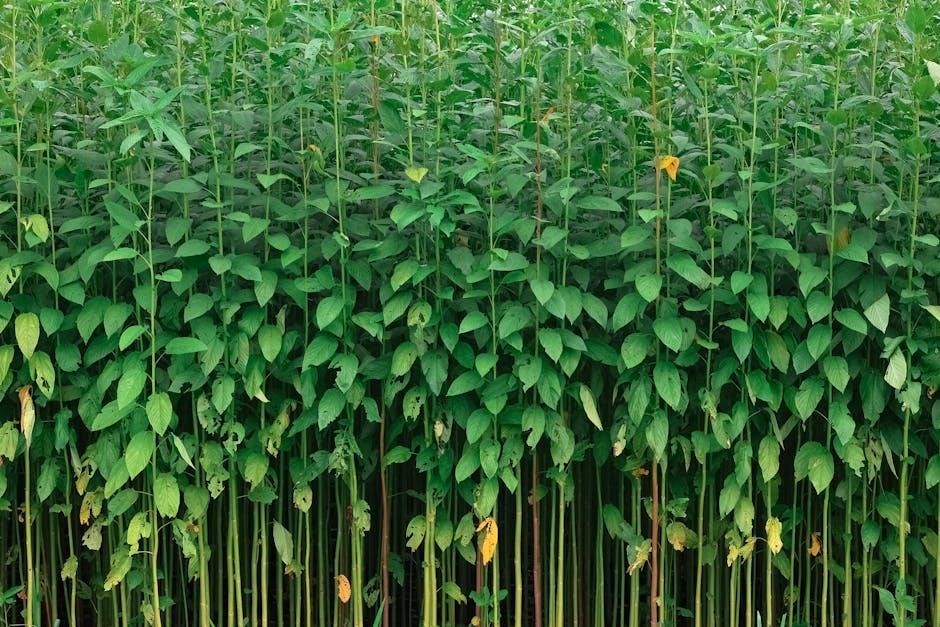
Understanding these functions is key to assessing plant health and adaptation strategies.
Transpiration: Water Movement Through Plants

Transpiration is a crucial physiological process where water movement occurs throughout the plant, starting from the roots and exiting through stomata in the leaves.
This process isn’t merely water loss; it drives nutrient transport from the roots to the shoots, facilitating essential functions like photosynthesis and maintaining turgor pressure.
Understanding transpiration is vital in plant systems practice, as it directly impacts plant health and survival, especially in varying environmental conditions.
Factors influencing transpiration rates include humidity, temperature, wind speed, and light intensity – all key considerations when evaluating plant performance.
Assessing transpiration rates helps determine a plant’s water use efficiency and its ability to cope with drought or excessive moisture, making it a core concept in plant biology studies.
Practice questions often focus on the relationship between transpiration and environmental factors, testing comprehension of this fundamental process.
Photosynthesis: Creating Energy
Photosynthesis is the cornerstone of plant energy production, converting light energy into chemical energy in the form of sugars.
This process, occurring within chloroplasts, utilizes carbon dioxide and water to generate glucose and oxygen, fueling plant growth and development.
Within plant systems practice, understanding photosynthesis is paramount, as it underpins all other physiological processes and ecological interactions.
Factors like light intensity, carbon dioxide concentration, and temperature significantly influence photosynthetic rates, impacting plant productivity.
Practice questions frequently assess knowledge of the photosynthetic equation, the role of chlorophyll, and the light-dependent and light-independent reactions.
Mastering this concept is crucial for comprehending plant adaptations to different environments and their contribution to global ecosystems.
Nutrient Uptake and Utilization
Nutrient uptake is vital for plant health, involving the absorption of essential elements from the soil via root systems.
Plants require macronutrients like nitrogen, phosphorus, and potassium, alongside micronutrients, for optimal growth and metabolic functions.
Within plant systems practice, understanding how plants acquire and utilize these nutrients is frequently tested through various question types.
Root hairs significantly enhance surface area for absorption, while active and passive transport mechanisms facilitate nutrient movement.
Once absorbed, nutrients are transported throughout the plant via xylem and phloem, supporting processes like protein synthesis and enzyme activity.
Deficiencies in essential nutrients manifest as specific symptoms, impacting plant development and overall productivity, a key focus in practice exercises.

Plant Adaptations
Plant adaptations showcase remarkable strategies for survival, including responses to arid, aquatic, and diverse environments.
Creepers and climbers exhibit unique structural adaptations for support and resource acquisition, tested in practice.
Adaptations to Arid Climates
Plants thriving in arid climates demonstrate fascinating adaptations to conserve water and withstand harsh conditions. These adaptations are crucial for survival where rainfall is scarce and temperatures fluctuate dramatically.
Succulents, like cacti, store water in their stems and leaves, exhibiting a thickened epidermis to reduce transpiration. Deep root systems allow plants to access groundwater sources unavailable to shallow-rooted species. Other strategies include reduced leaf surface area – often manifesting as spines – minimizing water loss through transpiration.
Some plants employ CAM photosynthesis, opening stomata at night to absorb carbon dioxide, reducing water loss during the hot daytime hours. Waxy coatings on leaves further prevent evaporation. Understanding these adaptations is key to appreciating plant resilience and is frequently assessed in plant systems practice materials, often through questions focusing on structural and physiological modifications.
Adaptations to Aquatic Environments
Plants inhabiting aquatic environments showcase remarkable adaptations to thrive in waterlogged conditions and varying levels of salinity. These adaptations address challenges related to oxygen availability, nutrient uptake, and structural support.
Hydrophytes, or aquatic plants, often possess reduced or absent cuticle layers, facilitating nutrient absorption directly from the water. Aerenchyma, a tissue with large air spaces, provides buoyancy and allows for oxygen diffusion to submerged parts. Root systems may be reduced or absent, as nutrient uptake primarily occurs through leaves and stems.
Some aquatic plants exhibit specialized structures for gas exchange, while others have flexible stems to withstand water currents. Salt tolerance is crucial in saline environments, with mechanisms for excreting excess salt. Plant systems practice often includes questions assessing knowledge of these adaptations, focusing on how plants overcome the unique challenges of aquatic life.
Creepers and Climbers: Structural Adaptations
Creepers and climbers demonstrate fascinating structural adaptations to overcome limitations in vertical support and maximize sunlight exposure. Creepers, with weak stems, spread horizontally along the ground, utilizing nodes to root and establish new plants. Climbers, conversely, ascend vertical structures using specialized mechanisms.
These mechanisms include tendrils – modified leaves or stems that coil around supports – and adventitious roots, which adhere to surfaces. Climbing plants often exhibit reduced xylem development, relying on the support for water transport. Their stems are typically flexible, allowing them to withstand wind and movement.
Plant systems practice frequently tests understanding of these adaptations, asking students to differentiate between creepers and climbers and explain the functional significance of their structural features. Recognizing these adaptations highlights the remarkable plasticity of plant morphology in response to environmental pressures.

Plant Systems Practice Questions
Practice questions assess knowledge of plant physiology, including transpiration, root systems, tissues, and climate adaptations, utilizing multiple-choice and short-answer formats.
Sample Question Types (Multiple Choice)
Multiple-choice questions are a cornerstone of evaluating understanding within plant systems. These questions typically present a stem – a question or incomplete statement – followed by several answer options, only one of which is correct.
For example: “Which plant tissue transports water from roots upwards?” Options might include: A) cortex, B) epidermis, C) mesophyll, and D) xylem. The correct answer, of course, is xylem.
Another example: “Which part of a papaya plant takes in water and minerals?” This tests knowledge of root function. Questions also assess understanding of broader concepts like adaptations. A question could ask about adaptations to arid climates, requiring students to select the most appropriate survival strategy.
These questions efficiently test recall and application of core plant biology principles, forming a vital part of practice assessments.
Sample Question Types (Short Answer)
Short answer questions demand a more detailed understanding of plant systems than multiple-choice formats. These require students to formulate responses, demonstrating comprehension beyond simple recall.
An example question: “What are creepers and climbers? Give examples.” A strong answer would define each, explaining weak stems for creepers and the need for support in climbers, with examples like strawberries (creeper) and grapes (climber).
Another question could be: “What part of a plant takes in food and water?” The expected response is “Roots take in food and water,” showcasing knowledge of root function.
These questions assess the ability to synthesize information and articulate concepts concisely. They encourage critical thinking and a deeper engagement with the material, proving valuable in practice assessments.

Resources for Further Learning
Explore online plant biology resources and recommended textbooks to deepen your understanding of plant systems.
BMC Plant Biology offers open-access research, while practice PDFs enhance learning and skill development.
Online Plant Biology Resources
Numerous online platforms offer comprehensive resources for studying plant systems. Websites dedicated to botany and plant biology provide detailed explanations of plant anatomy, physiology, and ecological adaptations. Specifically, searching for “plant systems practice pdf” yields valuable downloadable worksheets and study guides designed to reinforce learning.
Academic institutions often host open educational resources, including lecture notes, interactive tutorials, and virtual labs. These resources can supplement textbook learning and provide a more dynamic understanding of complex concepts like transpiration and nutrient uptake. Furthermore, platforms like LinkedIn showcase discussions and shared materials related to plant variety protection laws and systems, offering insights into practical applications.
BMC Plant Biology, an open-access journal, presents cutting-edge research articles covering all aspects of plant biology, from molecular mechanisms to whole-plant studies. Utilizing these diverse online resources allows for a well-rounded and in-depth exploration of plant systems.
Recommended Textbooks
Several textbooks provide a solid foundation for understanding plant systems, complementing plant systems practice pdf materials. Introductory biology texts often dedicate significant chapters to plant biology, covering topics like root and shoot structures, vascular tissues (xylem and phloem), and photosynthetic processes. More specialized plant physiology textbooks delve deeper into the intricacies of plant function, including transpiration, nutrient uptake, and hormonal regulation.
Life Science textbooks, particularly those focusing on botany, offer detailed explanations of plant anatomy and the roles of different plant parts – roots, stems, leaves, and flowers. These resources frequently include practice questions and diagrams to aid comprehension; When selecting a textbook, consider its clarity, comprehensiveness, and alignment with your learning objectives. Supplementing textbook study with online resources and practice materials ensures a thorough grasp of plant systems.