

The Crucible: A Play in Four Acts ─ Comprehensive Guide
Discover readily available PDF versions of Arthur Miller’s masterpiece, alongside character maps and introductory analyses detailing the Salem witch trials’ historical context.
Understanding the Play’s Context
Delving into “The Crucible” requires acknowledging its multifaceted nature, readily accessible through numerous online resources, including complete PDF versions of the four-act play. These digital copies facilitate in-depth study, allowing readers to trace the narrative’s progression and analyze Miller’s powerful prose.
Furthermore, understanding the play’s context necessitates exploring supplementary materials like character maps, which visually represent the intricate relationships between individuals in Salem. Introductory analyses, often found alongside the PDF, provide crucial historical background on the infamous witch trials, illuminating the societal anxieties and religious fervor that fueled the accusations.
Accessing these resources – the full text PDF, character guides, and historical overviews – is paramount to grasping the play’s profound themes and appreciating Miller’s masterful storytelling. They offer a comprehensive foundation for interpreting the complex dynamics at play within the narrative.
Historical Background of the Salem Witch Trials
Examining the Salem Witch Trials, the real-life events inspiring “The Crucible,” is crucial for understanding the play’s depth, with detailed accounts often accompanying PDF versions of the script. The trials, occurring in 1692 Massachusetts, stemmed from a climate of religious extremism, fear, and social unrest. Accusations, largely initiated by young women, spiraled into mass hysteria, leading to the imprisonment and execution of innocent individuals.
PDF resources often contextualize these events, explaining the prevailing Puritan beliefs, the societal pressures, and the political landscape of the time. Understanding the historical context reveals how easily fear and paranoia can manipulate communities, mirroring the play’s central themes.
Accessing these historical analyses alongside the play’s text – readily available in PDF format – provides a richer, more informed reading experience, highlighting the tragic consequences of unchecked accusations and societal panic.
Arthur Miller’s Life and Influences
Delving into Arthur Miller’s life reveals the forces shaping “The Crucible,” often explored in supplementary materials accompanying PDF versions of the play. Born in 1915, Miller witnessed the Great Depression and the rise of McCarthyism, profoundly impacting his worldview and artistic expression. His experiences with social injustice and political persecution fueled his desire to expose hypocrisy and defend individual liberties.
PDF resources frequently detail Miller’s commitment to realism and his use of historical events as allegories for contemporary issues. “The Crucible” directly responded to the Red Scare, drawing parallels between the Salem witch trials and the anti-communist investigations of the 1950s.
Understanding Miller’s biography enhances appreciation for the play’s enduring relevance, readily accessible through comprehensive PDF analyses and critical essays.
The Play as an Allegory for McCarthyism
“The Crucible,” widely available as a PDF, functions as a potent allegory for McCarthyism, the period of intense anti-communist suspicion in 1950s America. Arthur Miller used the Salem witch trials as a parallel to Senator Joseph McCarthy’s relentless accusations and investigations, exposing the dangers of baseless accusations and political repression.

PDF study guides often highlight how characters like Abigail Williams mirror McCarthy’s tactics, exploiting fear and manipulating evidence to achieve personal and political gain. The play’s themes of mass hysteria, conformity, and the suppression of dissent directly reflect the climate of fear prevalent during the Red Scare.
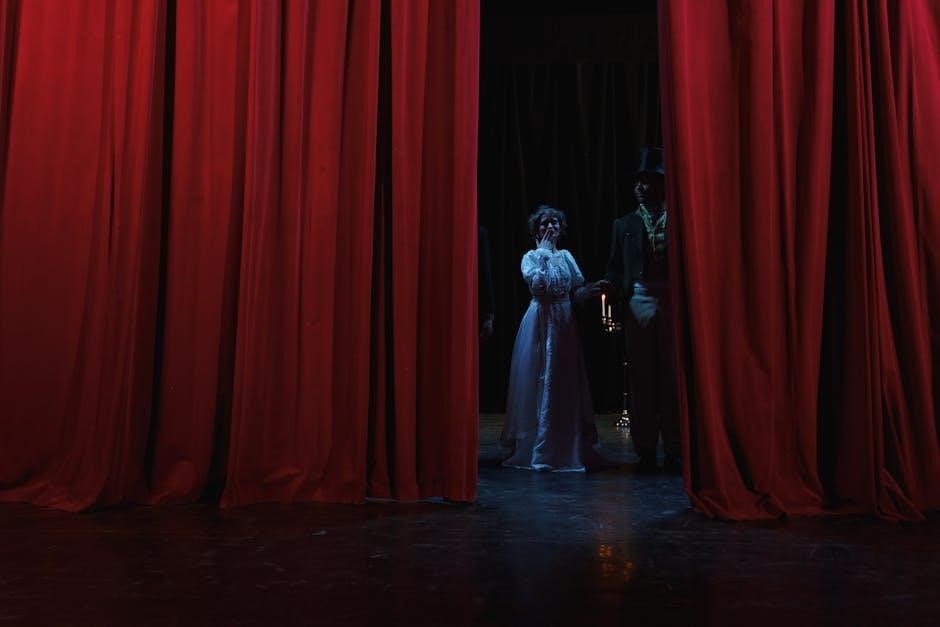
Analyzing the play through this lens, as detailed in many PDF resources, reveals Miller’s powerful critique of political extremism and the importance of defending individual rights.

Act-by-Act Breakdown & Analysis
Explore detailed summaries and analyses of each act, often found within comprehensive PDF guides, revealing the escalating tensions and tragic consequences unfolding.
Act I: Seeds of Hysteria
Act I meticulously establishes the atmosphere of suspicion and fear that grips Salem, readily accessible through detailed PDF study guides. These resources illuminate the initial accusations sparked by Abigail Williams and her friends’ bewitched behavior in the forest.
PDF analyses highlight how Miller expertly introduces key characters and foreshadows the escalating hysteria. The discovery of Betty Parris’s illness, coupled with Tituba’s unsettling presence, fuels the community’s anxieties.
Comprehensive PDFs often include character maps detailing relationships and motivations, crucial for understanding the power dynamics at play. The arrival of Reverend Hale signifies the external authority brought in to investigate, marking a turning point towards formal accusations and trials. These downloadable resources provide invaluable context for grasping the play’s initial momentum.
Abigail Williams, a central figure, is thoroughly dissected in available PDF character analyses. These resources reveal her manipulative nature and vengeful motivations, stemming from a past affair with John Proctor and a desire to reclaim her reputation.
PDF study guides detail how Abigail orchestrates the accusations, leveraging the girls’ fear and the community’s religious fervor to deflect blame and eliminate her rivals. Her calculated lies and skillful deception are key to understanding the play’s unfolding tragedy.

Detailed character maps within these PDFs illustrate Abigail’s complex relationships, particularly her power over the other girls and her fraught connection with the Proctor family. Understanding her background, readily available in downloadable resources, is crucial for interpreting her actions throughout the play.
The Initial Accusations and Rising Tension
PDF analyses of The Crucible meticulously trace the escalating hysteria beginning with Betty Parris’s strange illness and Abigail’s initial accusations of witchcraft. Downloadable resources highlight Tituba’s coerced confession, marking a pivotal moment where fear begins to grip Salem.
These documents demonstrate how Abigail skillfully exploits the situation, naming individuals she deems undesirable, fueling the community’s paranoia. The PDFs detail the swift spread of accusations, transforming personal grudges into claims of demonic possession.
Study guides available as PDFs emphasize the rising tension as Reverend Hale arrives, attempting to discern truth from falsehood, yet inadvertently contributing to the escalating panic. The play’s early acts, thoroughly examined in these resources, establish the foundation for the ensuing chaos.
Act II: Confrontation and Doubt
Comprehensive PDF study guides dissect Act II, focusing on the strained relationship between John and Elizabeth Proctor, and the intensifying scrutiny from Deputy Governor Danforth and Reverend Hale. These resources detail the arrival of Ezekiel Cheever and the search warrant, escalating the tension within the Proctor household.
PDF analyses highlight John’s internal conflict as he grapples with his past affair with Abigail and attempts to navigate the increasingly treacherous accusations. The downloadable materials emphasize the significance of the poppet and Mary Warren’s testimony, revealing the fragility of truth.
These documents explore the growing doubt surrounding the accusations, yet also demonstrate the court’s unwavering commitment to rooting out perceived witchcraft, as evidenced in detailed scene breakdowns available in PDF format.
John Proctor’s Internal Conflict
Detailed PDF analyses delve into John Proctor’s agonizing internal struggle, meticulously charting his battle between preserving his reputation and confessing to a lie to save his life. These resources explore the weight of his past adultery with Abigail Williams and its devastating consequences on his marriage with Elizabeth.
PDF study guides illuminate Proctor’s moral dilemma, showcasing his initial attempts to expose Abigail’s deceit and his subsequent descent into despair as the court’s hysteria intensifies. They highlight his evolving understanding of integrity and the true meaning of honor.
Available PDFs offer character analyses tracing Proctor’s transformation from a flawed man seeking redemption to a tragic hero willing to sacrifice himself rather than compromise his principles, providing a profound exploration of his complex psyche.
The Court Proceedings Begin
Comprehensive PDF resources meticulously detail the commencement of the Salem court proceedings, outlining Deputy Governor Danforth’s arrival and the establishment of a formal, yet increasingly biased, judicial system. These documents showcase the escalating tension as accusations mount and the court’s authority solidifies.
PDF study guides analyze the initial testimonies, highlighting the manipulative tactics employed by Abigail Williams and the other girls to condemn innocent individuals. They reveal how spectral evidence—based on visions and claims of being afflicted—becomes central to the court’s decisions.
Available PDFs provide scene-by-scene breakdowns, illustrating the power dynamics at play and the growing sense of injustice as the court prioritizes maintaining its authority over seeking truth, offering a chilling depiction of the unfolding tragedy.
Act III: The Turning Point
Detailed PDF analyses pinpoint Act III as the pivotal moment in “The Crucible,” where the escalating hysteria reaches its peak. These resources dissect Mary Warren’s desperate attempt to expose the girls’ deceit, and the subsequent chaos that ensues when her testimony falters under intense pressure.
PDF study guides thoroughly examine John Proctor’s confession, a desperate bid to save his life and expose Abigail’s lies. They highlight the significance of his ultimate decision to tear up his confession, choosing honor over survival, a moment vividly captured in available PDF versions of the play.
These downloadable resources showcase how Act III irrevocably alters the course of the play, solidifying the tragic trajectory and demonstrating the devastating consequences of unchecked accusations and societal paranoia.
Mary Warren’s Testimony and its Consequences
Comprehensive PDF guides meticulously analyze Mary Warren’s crucial testimony in Act III, detailing her initial confession of the girls’ fabricated accusations. These resources highlight the immense pressure exerted upon her by Abigail Williams and the other girls, leading to her dramatic and ultimately devastating reversal.
PDF study aids explore the consequences of her wavering testimony – the court’s rejection of her truth, Proctor’s desperate intervention, and the escalating chaos that ensues. They showcase how Miller uses this scene to expose the power dynamics at play and the fragility of truth in a climate of fear.
Downloadable PDFs emphasize how Mary’s breakdown symbolizes the crushing weight of societal hysteria and the impossibility of reason prevailing against mass delusion, marking a turning point in the play’s tragic arc.
Proctor’s Confession and its Impact
Detailed PDF analyses dissect John Proctor’s agonizing decision to confess to witchcraft to save his life, and his subsequent refusal to sign the written confession. These resources illuminate the internal conflict tearing him apart – his desire for self-preservation versus his commitment to preserving his integrity and reputation.

PDF study guides explore the profound impact of his final act of defiance, emphasizing how it transcends personal salvation and becomes a powerful statement against the corrupt court and the pervasive injustice of the Salem witch trials. They highlight the symbolic weight of his signed confession.
Downloadable PDFs showcase how Proctor’s ultimate sacrifice restores his honor and offers a glimmer of hope amidst the tragedy, solidifying his status as a tragic hero and leaving a lasting impression on the play’s themes.
Act IV: Justice and Sacrifice
Comprehensive PDF resources delve into the chilling climax of “The Crucible,” focusing on the escalating tension and the stark choices faced by the remaining accused. These downloadable guides meticulously analyze Giles Corey’s unwavering defiance under torture, refusing to enter a plea and preserving his land for his sons – a powerful act of silent protest.
PDF study materials dissect the courtroom drama, highlighting the mounting evidence of the girls’ deceit and the growing desperation of the authorities to maintain control. They explore the significance of Reverend Parris’s increasing fear and the crumbling facade of the court’s legitimacy.
Detailed analyses within these PDFs illuminate the tragic weight of John Proctor’s final decision, emphasizing its profound implications for justice, integrity, and the enduring power of individual conscience.
Giles Corey’s Defiance
Detailed PDF analyses of “The Crucible” extensively cover Giles Corey’s pivotal stand against the court, showcasing his unwavering commitment to principle over self-preservation. These resources highlight the brutal methods employed to force a plea from him, specifically the pressing with stones – a horrific demonstration of the court’s power.
PDF study guides meticulously examine Corey’s refusal to cooperate, emphasizing his desire to protect his family’s name and land from forfeiture. They explore the legal complexities of the time and the significance of his silent protest against the unjust proceedings.
These downloadable materials dissect the dramatic tension surrounding Corey’s torture, illustrating his stoic endurance and the profound impact of his sacrifice on the unfolding events within the play’s narrative.
John Proctor’s Final Decision
Comprehensive PDF guides dedicated to “The Crucible” thoroughly analyze John Proctor’s agonizing choice in Act IV, detailing his internal struggle between confessing a lie to save his life and maintaining his integrity. These resources explore the weight of his past actions and the societal pressures influencing his decision.
PDF study materials dissect Proctor’s eventual refusal to sign the false confession, emphasizing his reclaiming of his name and dignity. They highlight the symbolic importance of his torn confession as a rejection of the court’s corruption and a testament to his moral awakening.
Downloadable analyses examine the profound impact of Proctor’s sacrifice, illustrating how his death serves as a powerful condemnation of the Salem witch trials and a defense of individual conscience.

Key Characters and Themes
Explore detailed character analyses and thematic explorations within downloadable PDFs, focusing on Proctor, Abigail, reputation, hysteria, and power dynamics.
John Proctor: A Tragic Hero
Delve into John Proctor’s complex character through readily accessible PDF resources, offering comprehensive analyses of his internal struggles and ultimate sacrifice. These documents illuminate his initial flaws – a past affair with Abigail – and his subsequent journey towards redemption.
Discover how PDFs dissect Proctor’s attempts to navigate the escalating hysteria, his desperate efforts to expose Abigail’s deceit, and the agonizing choice he faces between confessing to a lie and preserving his integrity.
Examine critical essays available in PDF format that explore Proctor’s tragic flaw – his pride – and how it contributes to his downfall. Understand his pivotal role in the play’s climax, and how his final decision embodies the themes of honor and justice, all detailed within these downloadable resources.
Abigail Williams: Manipulation and Revenge
Explore Abigail Williams’s manipulative nature through detailed character analyses found in readily available PDF documents. These resources reveal her driving motivations: a vengeful desire for John Proctor and a ruthless ambition to control the events unfolding in Salem.
Uncover how PDFs dissect her calculated accusations, demonstrating her skill in exploiting the community’s fears and insecurities. Examine the evidence presented within these downloadable files that showcases her ability to incite mass hysteria and deflect blame.
Analyze critical essays, accessible in PDF format, that delve into the psychological complexities of Abigail’s character, highlighting her lack of empathy and her willingness to destroy others to achieve her goals. Understand her pivotal role as the play’s antagonist, thoroughly explained in these resources.

The Theme of Reputation and Honor
Investigate how the theme of reputation and honor permeates Arthur Miller’s The Crucible, as detailed in comprehensive PDF analyses. These documents illuminate the Puritan society’s obsession with public image and the devastating consequences of tarnished reputations.

Discover how characters like John Proctor grapple with preserving their honor amidst false accusations, with downloadable PDFs offering insights into his internal conflict. Explore the societal pressures that force individuals to choose between confessing to falsehoods and maintaining their integrity.
Analyze critical essays, available in PDF format, that dissect the play’s exploration of personal versus communal honor, and the fragility of both. Understand how the pursuit of reputation drives many characters’ actions, as explained within these readily accessible resources.
The Dangers of Mass Hysteria
Examine how readily available PDF analyses of The Crucible demonstrate the terrifying power of mass hysteria within the Salem community. These resources detail how unfounded fears and accusations rapidly escalate, fueled by paranoia and religious extremism.
Explore downloadable character maps and summaries, presented in PDF format, that illustrate how individual anxieties contribute to the collective frenzy. Understand how easily truth becomes distorted and reason abandoned when gripped by widespread panic, as highlighted in these documents.
Analyze critical essays, accessible as PDFs, that dissect Miller’s portrayal of societal breakdown and the dangers of unchecked authority during times of crisis. Discover how the play serves as a cautionary tale about the fragility of justice and the importance of critical thinking.
Power and Authority in Salem
Investigate how PDF versions of The Crucible reveal the complex dynamics of power and authority within the rigid Puritan society of Salem. These resources showcase the influence of figures like Reverend Parris and Judge Danforth, and their roles in perpetuating the witch trials.
Study downloadable character analyses, often found in PDF format, that demonstrate how accusations become tools for personal gain and social control. Understand how individuals exploit their positions to manipulate others and consolidate their own power, as detailed in these analyses.
Delve into critical essays, accessible as PDFs, that explore the play’s commentary on the abuse of authority and the dangers of unchecked power. Discover how Miller critiques the societal structures that allowed such injustice to flourish, as presented in these scholarly interpretations.

Resources and Further Exploration
Access downloadable PDFs of the play, character maps, and critical essays for in-depth analysis, enhancing your understanding of Miller’s impactful work.
Finding “The Crucible” PDF Online
Numerous online resources offer downloadable PDF versions of Arthur Miller’s “The Crucible.” Websites frequently provide the complete text of all four acts, allowing for convenient study and analysis. Several educational platforms and digital libraries host these files, often alongside supplementary materials like character maps and introductory summaries.
Specifically, searching for “The Crucible Act IV PDF” or “The Crucible Full Text PDF” yields direct links to downloadable documents. Be mindful of source reliability when downloading; prioritize established educational websites or reputable online booksellers. Furthermore, exploring online archives can uncover various editions and interpretations of the play. Remember to respect copyright regulations when accessing and distributing these materials. The availability of these PDFs facilitates accessible engagement with this classic piece of American literature.
Character Maps and Analysis Tools
Alongside readily available PDF copies of “The Crucible,” numerous online tools enhance understanding of the play’s complex characters and themes. Character maps visually represent relationships between individuals like Abigail Williams, John Proctor, and Reverend Hale, clarifying their motivations and conflicts. These maps often accompany detailed character analyses, exploring their roles within the narrative and their symbolic significance.
Furthermore, websites dedicated to literary analysis provide summaries of each act, identifying key plot points and offering interpretations of Miller’s allegorical intent. Interactive tools allow students to track character development and analyze dialogue, fostering a deeper comprehension of the play’s nuances. Utilizing these resources alongside the PDF text provides a comprehensive learning experience, aiding in essay writing and critical discussion.
Full Text of the Play – Online Resources
Accessing the complete text of Arthur Miller’s “The Crucible” is remarkably easy through various online platforms. Numerous websites offer the play’s full script, often in PDF format, allowing for convenient reading and annotation. These resources frequently include options for downloading the text for offline access, ideal for students and researchers. Beyond simple PDF downloads, some sites provide interactive versions with built-in dictionaries and audio pronunciations, enhancing comprehension.
Additionally, digital libraries and educational websites host the play, ensuring reliable and legally accessible copies. Exploring these resources allows readers to engage directly with Miller’s language and dramatic structure, supplementing analyses and character studies. Finding a readily available PDF facilitates close reading and a deeper appreciation for this American classic.
Exploring Critical Essays and Interpretations
Delving into critical analyses of “The Crucible” enriches understanding beyond the play’s narrative. Numerous scholarly essays dissect Miller’s allegorical intentions, particularly its connection to McCarthyism, and explore the complex themes of power, reputation, and mass hysteria. These interpretations, often available online through academic databases and literary journals, provide diverse perspectives on the characters and events.
Furthermore, accessing the play’s PDF alongside these critical essays allows for direct textual reference, strengthening analytical arguments. Students and researchers benefit from comparing interpretations with the original text, fostering a nuanced comprehension of Miller’s artistry. Exploring these resources reveals the play’s enduring relevance and its continued power to provoke thought and discussion.
The Crucible Mod (Gaming Context)
Interestingly, “The Crucible” also exists as a mod within gaming communities, demonstrating the play’s cultural impact extending beyond literature and history. This mod introduces new units, orders, and hero abilities, reimagining the themes of conflict and accusation within a strategic gameplay environment. While seemingly disparate from Miller’s original work, the mod taps into the core tensions of the play – power dynamics, betrayal, and the consequences of unchecked accusations.
Although a PDF of the play might not directly relate to the gaming mod, understanding the source material enriches the experience; Players familiar with the historical context and character motivations can appreciate the mod’s thematic resonance, adding depth to their gameplay. It’s a unique intersection of classic literature and modern entertainment.
The Crucible (Burinelli) ⏤ Online Reading Options
For those seeking to delve into “The Crucible,” online platforms offer convenient access to the full text, including versions by Burinelli. Websites like fb2.top provide the play in various formats – fb2, PDF, MOBI, TXT, and RTF – catering to diverse reading preferences. These digital resources allow readers to engage with Miller’s work instantly, without the need to purchase a physical copy or locate a library edition.
Furthermore, these online options often include features like built-in dictionaries and audio pronunciations, enhancing comprehension and accessibility. While a direct PDF download is available, exploring different formats can optimize the reading experience. This accessibility ensures that Miller’s powerful narrative remains widely available to audiences worldwide.